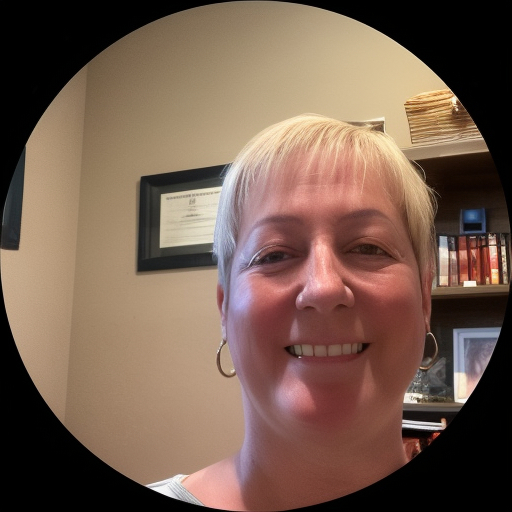
- Calm, steady guidance
- Focus on strengths
- Goal oriented
About Cheryl
Cheryl believes people know their own stories and brings a collaborative stance to sessions. She listens for strengths and builds on what already works in a person's life. This approach helps clients tackle issues like shame, guilt, and loss without feeling overwhelmed.
Her work addresses a wide range of concerns, including abandonment, caregiver stress, codependency, commitment and communication problems, and control issues. Cheryl also supports people dealing with infidelity, family problems, and the practical fallout of divorce and separation. She helps clients sort priorities and make choices that fit their values.
Sessions are practical and focused on clear next steps. Cheryl uses straightforward conversation to help people reframe problems, set manageable goals, and try new behaviors between sessions. She emphasizes progress over perfection and adapts pacing to each person's needs.
People who want steady support during major life changes may find her style helpful. Cheryl encourages bravery in small acts and offers steady guidance as clients rebuild confidence and direction.
License and NPI on record
- LMFT
- California · 51633
- NPI
- 1003014119
As listed on the therapist's profile. A license can be checked with the state board, and an NPI with the national NPI registry.
Areas of expertise
Primary focus
Additional focus areas
Experience
20+ years
Credentials
California
Languages
English
Evidence-based approaches and online care
Cheryl works with practical, evidence-based techniques that help people manage mood and stress. One common approach focuses on changing unhelpful thinking patterns and building new habits to reduce anxiety and depression; it teaches concrete skills for coping and problem solving. Another approach centers on grief and loss support, helping people process emotions, honor what they lost, and find ways to move forward.Choosing the right approach is a collaborative process. Cheryl will discuss goals, preferences, and what has or has not helped in the past, then suggest ways to proceed. Together the therapist and client adjust pace and techniques as needed so the work fits real life.
If you are considering online therapy, confirm the session formats before booking since the biography does not list them. Online work can make it simpler to fit sessions into a busy week, avoid travel time, and keep momentum between appointments. It can also allow for shorter check-ins when schedules are tight and for using different communication styles to match comfort and energy levels.
Frequently asked questions
What kinds of problems does Cheryl help with?
She helps with stress, anxiety, grief, low self-esteem, career difficulties, depression, and related issues such as abandonment, codependency, and communication problems.
What is her approach to therapy like?
Her style is collaborative and practical. She listens for strengths, helps set small goals, and uses straightforward conversation to try new ways of coping.
How much experience does she have?
Cheryl has 20 years of professional work experience supporting people through stress, grief, mood concerns, and life transitions.
What credentials and location are listed?
She is a LMFT - Licensed Marriage and Family Therapist - practicing in California.
Which languages are sessions offered in?
Sessions are offered in English.
Do you know what session formats are available?
The therapist's original biography does not specify session formats; please confirm current session options before booking.
How are fees and billing handled?
Cost varies with location and therapist availability; sessions use a subscription that can be canceled at any time.
How do I begin working with Cheryl?
Select the Start Therapy button, complete a short matching questionnaire, and schedule according to therapist availability.
Good to know
Therapists listed here offer talking therapy online. It is not legal, financial or custody advice, and no therapist can promise how a separation or a relationship will turn out.
If you are not safe at home, or someone is hurting or threatening you, contact emergency services or a domestic-abuse helpline. The numbers are at the foot of this page.